

Wound Care Clinic in Egg Harbor Township, NJ
A small cut or scrape usually begins healing within days. When a wound lingers for weeks, repeatedly opens, or seems to be getting worse instead of better, something may be interfering with the healing process. If you are looking for a wound care clinic in Egg Harbor Township, NJ, SMC Physicians provides specialized wound care for area patients at its nearby Northfield Wound Care Center.
Chronic wounds deserve attention. They can become painful, limit mobility, and increase the risk of infection and other complications. More importantly, a wound that refuses to heal may be connected to another health issue, such as diabetes or poor circulation. Specialized wound care looks beyond the surface to determine what may be slowing recovery.
 When Is a Wound Taking Too Long to Heal?
 When Is a Wound Taking Too Long to Heal?
Not every wound follows exactly the same timeline. Its size, location, cause, and your overall health all influence how quickly healing occurs.
What matters is whether you are seeing progress.
A wound that remains open, repeatedly breaks down, develops increasing drainage, or does not appear to be improving should be evaluated. The same is true if the surrounding skin becomes increasingly red, warm, swollen, or painful.
Certain medical conditions make delayed healing more likely. Diabetes can affect circulation and sensation, particularly in the feet. Vascular disease may reduce the blood supply needed for tissue repair. Limited mobility can place repeated pressure on certain areas of the body.
Rather than continuing to treat the wound at home and hoping something changes, a wound care specialist can determine why healing has stalled.
What Types of Wounds Need Specialized Care?
People arrive at a wound care center for many different reasons.
Diabetic foot ulcers are one example. Because diabetes can lead to nerve damage, a person may develop an injury on the foot without realizing how serious it has become. Reduced circulation can make healing more difficult as well.
Venous leg ulcers are another common problem. These wounds are associated with problems returning blood from the legs to the heart and often develop around the lower leg or ankle.
Wound care specialists also treat pressure injuries, sometimes called pressure ulcers, which can develop when prolonged pressure reduces blood flow to an area of skin. People who have difficulty changing positions independently may be particularly vulnerable.
Post-surgical wounds can sometimes require additional care too, especially if an incision separates, becomes infected, or does not heal as expected.
The wound may look different from one patient to another, but the concern is the same: normal healing is not happening.
Treating More Than the Wound You Can See
Simply covering a chronic wound with a bandage may not address the reason it remains open.
That is why wound care begins with an evaluation.
A specialist may consider how long the wound has been present, whether it has changed, previous treatments, drainage, signs of infection, circulation, medications, nutrition, mobility, and underlying medical conditions.
Treatment can then be matched to the patient's needs.
For some wounds, damaged or unhealthy tissue may need to be removed through a process known as debridement. Specialized dressings can help maintain an appropriate environment for healing and manage drainage.
Certain patients may also benefit from advanced treatment approaches such as ultrasound debridement, allograft skin, epidermal skin harvesting, or dermal skin harvesting.
There is no single wound treatment that is right for everyone.
Diabetes and Foot Wounds Require Extra Attention
Anyone can develop a wound, but people with diabetes need to be particularly cautious about injuries to their feet.
Diabetic neuropathy can reduce sensation. That means a blister, cut, or pressure injury may not hurt as much as expected. Without pain calling attention to the problem, the wound can worsen before the person realizes it.
Checking the feet regularly can help identify problems earlier.
If a diabetic foot ulcer develops, reducing pressure on the injured area may become part of treatment. Special off-loading devices can help keep pressure away from the wound while it heals.
It is also important not to use pain alone as a measure of severity. A wound can be significant even when it does not hurt very much.
Circulation Can Make a Difference
Healthy tissue needs an adequate blood supply. When circulation is compromised, wounds may take longer to close.
This is one reason wound and vascular care frequently overlap.
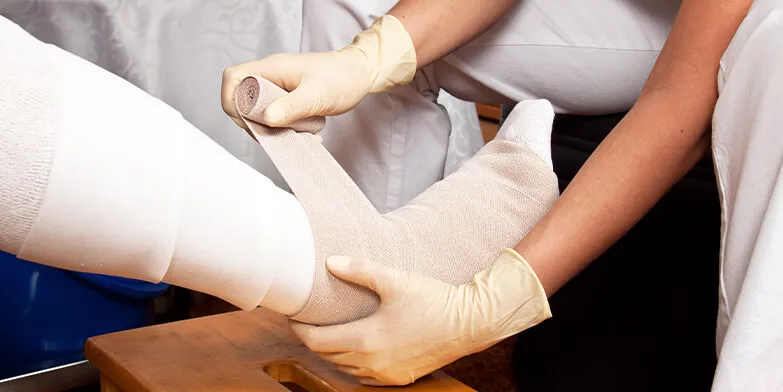
For patients with venous ulcers, compression therapy may sometimes help control swelling and support circulation. However, compression is not appropriate for every wound or every patient. Circulation should be evaluated first so the treatment can be used safely.
Addressing the underlying vascular problem can be just as important as caring for the wound itself.
Watch for Signs of Infection
A wound that is healing normally should generally improve rather than steadily worsen.
Increasing redness, warmth, swelling, drainage, pain, or an unpleasant odor can indicate infection. Fever, feeling ill, rapidly spreading redness, or red streaks extending away from the wound warrant prompt medical attention.
Black or discolored tissue can also be concerning.
Do not wait for a scheduled routine visit if a wound suddenly becomes significantly worse or you develop symptoms of a serious infection. Urgent or emergency medical care may be necessary.
Advanced Wound Care Near Egg Harbor Township
Living with a chronic wound can affect much more than the skin. Walking may become uncomfortable. Shoes may be difficult to wear. Everyday activities become harder, and constantly changing dressings can turn into an exhausting routine.
Specialized treatment offers a different approach.
SMC Physicians provides wound care for diabetic ulcers, venous leg ulcers, pressure wounds, post-surgical wounds, and other complex or slow-healing wounds. The goal is not only to care for the wound but also to identify factors that may be keeping it from healing.
For Egg Harbor Township residents, this specialized treatment is available nearby at SMC Physicians' Northfield Wound Care Center.
Find a Wound Care Clinic Near Egg Harbor Township, NJ
A wound that is not healing should not simply become something you learn to live with. Early evaluation may help uncover the reason healing has stalled and allow treatment to begin before complications become more severe.
If you are searching for a wound care clinic in Egg Harbor Township, NJ, turn to SMC Physicians for specialized care close to home. The team at the nearby Northfield Wound Care Center provides individualized treatment for chronic and complex wounds, including diabetic, venous, pressure, and post-surgical wounds. Call SMC Physicians Wound Care at 609-377-5150 to schedule an appointment today.