Wound Care Clinic in Linwood, NJ
Most wounds begin showing signs of healing fairly quickly. When that does not happen, weeks can pass with little improvement, and what began as a relatively minor injury can become a much bigger concern. If you are searching for a wound care clinic in Linwood, NJ, SMC Physicians offers specialized treatment nearby for wounds that are slow to heal, complex, or complicated by underlying health conditions.
Patients from Linwood can receive advanced wound care at SMC Physicians' Northfield Wound Care Center. The focus goes beyond changing dressings. The wound care team evaluates what may be interfering with healing and develops a treatment plan based on the wound itself as well as the patient's overall health.
 When a Wound Needs More Attention
 When a Wound Needs More Attention
There is a difference between a wound that simply needs time and one that is not progressing the way it should.
A scrape that looks a little better each day is very different from an open area that has remained virtually unchanged for several weeks. Increasing drainage, swelling, redness, odor, or pain can also signal that something is wrong.
Some wounds repeatedly close and reopen. Others gradually become larger.
Those changes should not be ignored.
Underlying medical conditions often play a role. Diabetes, vascular disease, circulation problems, and conditions that weaken the immune system can make normal wound healing much more difficult.
A wound care specialist can evaluate both the injury and the factors that may be preventing the body from repairing it.
Chronic Wounds Don't All Look the Same
There is no single type of patient who needs wound care.
Some people develop diabetic foot ulcers. Others have venous or arterial ulcers caused or complicated by circulation problems. Pressure injuries may occur in people who remain in one position for extended periods, while a surgical incision can occasionally fail to heal as expected.
SMC Physicians treats a variety of chronic and complex wounds, including:
- Diabetic foot ulcers
- Venous leg ulcers
- Arterial ulcers
- Pressure injuries
- Post-surgical wounds
- Traumatic wounds
- Non-healing incisions
- Skin tears
- Burns
Regardless of what originally caused the wound, the first question is why it is not healing normally.
Diabetes Can Make Small Injuries More Serious
Foot care is especially important for people living with diabetes.
Diabetic neuropathy can reduce sensation in the feet. A patient might develop a blister from a shoe, step on something sharp, or have a small cut without experiencing the pain that would normally draw attention to the injury.
At the same time, circulation problems can make it harder for damaged tissue to heal.
That combination can allow a seemingly minor foot wound to become more serious before it is noticed.
Regularly checking the feet for cuts, blisters, swelling, discoloration, or open areas is a useful habit for people with diabetes. A wound that does not begin improving should be evaluated rather than repeatedly treated at home.
Pain is not always a reliable indicator of how serious a diabetic wound has become.
What Happens at a Wound Care Appointment?
A wound care visit begins with looking at more than the visible injury.
Your specialist will want to know how the wound started, how long it has been present, what treatments you have already tried, and whether it has changed. Your health history can provide important clues as well.
Circulation, diabetes, medications, mobility, nutrition, previous surgery, and other medical conditions may all affect healing.
The wound itself is then assessed. Its size, depth, location, drainage, surrounding skin, and tissue can help determine what type of care may be appropriate.
From there, an individualized treatment plan can be developed.
Advanced Treatments for Difficult Wounds
Sometimes standard wound care is not enough.
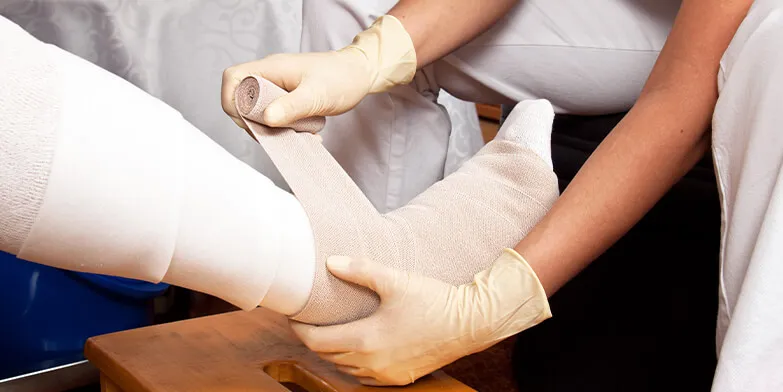
SMC Physicians offers advanced wound management techniques for patients whose wounds require additional intervention. Depending on the individual situation, treatment may include specialized wound dressings, compression therapy, pressure-relieving devices, debridement, and other advanced approaches.
Debridement involves removing unhealthy or damaged tissue that may interfere with healing. SMC Physicians also offers treatments such as ultrasonic debridement, allografts, epidermal skin harvesting, and dermal skin harvesting for appropriate patients.
Not every patient will need advanced treatment.
The right approach depends on the type of wound, its cause, the patient's circulation and health, and how the wound has responded to previous care.
The Role of Circulation in Wound Healing
A wound needs adequate blood flow to heal.
Blood carries oxygen and nutrients to injured tissue. When circulation is poor, the body's ability to repair itself can be compromised.
Venous disease, for example, may contribute to wounds on the lower legs. Swelling can also become part of the problem.
For some patients with venous wounds, compression therapy may be recommended after circulation has been evaluated. Other patients may require additional vascular assessment or treatment.
This is one reason specialized care can make such a difference. Treating only the open area without considering the condition that contributed to it may leave an important part of the problem unaddressed.
Know the Warning Signs of Infection
Any wound can potentially become infected, but chronic wounds deserve particularly close attention.
Watch for increasing redness or warmth around the wound, worsening swelling, new or heavier drainage, pus, an unpleasant odor, or pain that is becoming more intense rather than improving.
Fever is another warning sign.
A wound that begins turning black or develops significant discoloration also needs medical attention.
Severe symptoms, rapidly spreading redness, red streaking, fever with significant illness, or a rapidly worsening wound may require urgent or emergency medical care rather than waiting for a routine appointment.
Don't Get Discouraged by a Slow-Healing Wound
Living with a wound for weeks or months can become frustrating. Dressing changes become part of the daily routine. Walking may be uncomfortable. You might have difficulty wearing your normal shoes or doing things you previously did without a second thought.
It can also be discouraging when something that seems as though it should heal simply does not.
That does not mean there are no other options.
Specialized wound care is designed for exactly these situations. By identifying the barriers to healing and selecting treatment accordingly, the care team can work toward closing the wound while also helping reduce the chance of additional complications.
Find a Wound Care Clinic Near Linwood, NJ
You do not have to continue managing a stubborn wound on your own. If an injury has stopped improving, keeps reopening, or is showing concerning changes, an evaluation can help determine what is standing in the way of healing.
If you are searching for a wound care clinic in Linwood, NJ, SMC Physicians provides specialized wound treatment close to home at its Northfield Wound Care Center. The team cares for diabetic ulcers, vascular wounds, pressure injuries, surgical wounds, and other chronic or complex wounds using an individualized approach. Call SMC Physicians Wound Care at 609-377-5150 to schedule an appointment today.