

Wound Care Center in Pleasantville, NJ
A wound care center in Pleasantville, NJ, can help patients manage diabetic ulcers, pressure injuries, circulation-related ulcers, surgical wounds, and more. Pleasantville-area patients can receive specialized wound care at SMC Physicians’ nearby Northfield Wound Care Center.
Patients may benefit from specialized wound treatment when a wound is not healing properly, repeatedly returns, becomes infected, fails to respond to traditional care, or is complicated by another condition like diabetes or poor circulation. Treating the wound and addressing underlying conditions that may be contributing to it can help lower infection risk and reduce the potential for further tissue damage.
 What Does a Wound Care Center Treat?
 What Does a Wound Care Center Treat?
SMC Physicians treats chronic, complex wounds that require specialized care to heal. Our Northfield wound care team evaluates and treats diabetic wounds, circulation-related ulcers, pressure injuries, surgical wounds, traumatic wounds, and other complex wounds.
Patients are treated for wounds including:
- Diabetic foot ulcers
- Venous ulcers
- Arterial ulcers
- Pressure injuries (bedsores)
- Post-operative wounds
- Traumatic wounds, cuts, burns, or crush injuries
- Chronic wounds
Please visit SMC Physicians’ overview of wound care services to learn more about conditions managed by our wound care team.
When Is a Wound Considered Chronic?
A wound may be considered chronic when it does not progress through the expected healing process or remains unhealed over time. Underlying issues like diabetes, poor circulation, pressure on the wound, infection, or another condition can slow tissue repair.
Even small wounds may need professional care for individuals with diabetes, neuropathy (loss of nerve sensation), or circulation problems. Diabetic wounds that become infected can lead to serious consequences if left untreated.
Why Do Some Wounds Fail to Heal?
Some wounds won’t heal if they’re not receiving enough oxygen, nutrients, blood flow, or protection from pressure. Infection, inflammation, dead tissue, poor blood sugar control, or chronic illnesses can also cause problems with wound healing.
Diabetes can cause nerve damage and poor circulation, which may prevent injuries from being felt or healing quickly.
Venous disease can lead to the pooling of blood and fluids in the legs, contributing to swelling and open wounds. Arterial disease affects circulation and may prevent the legs from receiving an adequate blood supply for healing.
What Happens During a Wound Care Evaluation?
During a wound care visit, a specialist will evaluate the size, depth, amount of drainage, surrounding skin, blood supply, and signs of infection. Patients can expect a review of their medical conditions, medications, prior treatments, mobility challenges, nutritional status, and factors preventing wound healing.
Diagnostic tests may be ordered if infection is suspected or if the doctor believes there may be an underlying cause for poor wound healing, such as circulation issues or bone involvement. Findings from the evaluation and any diagnostic testing can help guide a personalized wound treatment plan.
What Treatments May Be Used for Chronic Wounds?
Advanced wound treatment depends on the condition of the wound and surrounding tissue. Options include debridement, advanced dressings, compression therapy, specialized offloading or pressure relief devices, infection management, and more.
Removing dead tissue during debridement can allow the wound to heal properly. Advanced wound dressings can help protect the wound, manage drainage, and create an optimal environment for wound healing to occur.
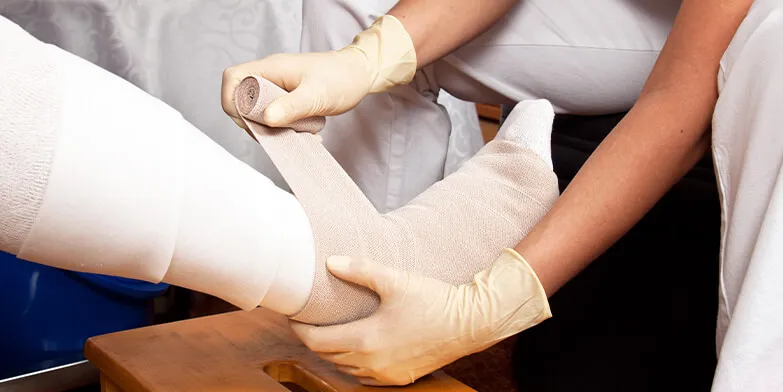
Compression stockings or bandaging may be advised for some venous ulcers or swollen legs once circulation is ruled out as a concern. Specialized footwear or foam devices can help prevent pressure on ulcers of the foot in diabetic patients. Negative-pressure wound therapy may be used for certain complex wounds.
Patients can visit SMC Physicians’ guide to finding wound care near me to learn about other wound care treatments.
Why Is Diabetic Wound Care Important?
Diabetic wound care is incredibly important for preventing large, costly, and limb-threatening wounds. Patients with diabetes may not notice cuts, pressure injuries, or serious infections on the bottom of the foot due to diabetic neuropathy (nerve damage).
Wounds can become more serious before a patient realizes an injury is present. Daily foot inspections and prompt medical attention at the first sign of trouble can help patients with diabetes avoid serious complications.
Non-healing foot ulcers in diabetic patients can increase the risk for infection, hospitalization, and lower extremity amputation. Care involves properly managing blood sugars, controlling infections, debriding wounds when unhealthy tissue is present, relieving pressure, coordinating with vascular providers, and educating patients on daily foot care.
What Are the Warning Signs of an Infected Wound?
Increasing redness, pain, swelling, drainage, foul odor, fever, or red streaking near a wound can be signs of infection. Wounds that expand in size, darken, or become increasingly painful should also be evaluated by a doctor.
Patients with diabetes, poor circulation, or weakened immune systems may need prompt evaluation because nerve damage or circulation problems can sometimes make an infection less noticeable.
Symptoms such as confusion, black tissue in the wound, severe swelling, fever, or rapidly worsening redness should receive prompt medical attention. Depending on the severity of the symptoms, urgent or emergency care may be appropriate.
Where Is the SMC Physicians Wound Care Center?
Patients searching for a wound care center in Pleasantville, NJ can receive specialized treatment at SMC Physicians’ nearby Northfield Wound Care Center.
To request an appointment, call (609) 377-5150 or use our online appointment request form and select Wound Care with Northfield as your preferred location.