

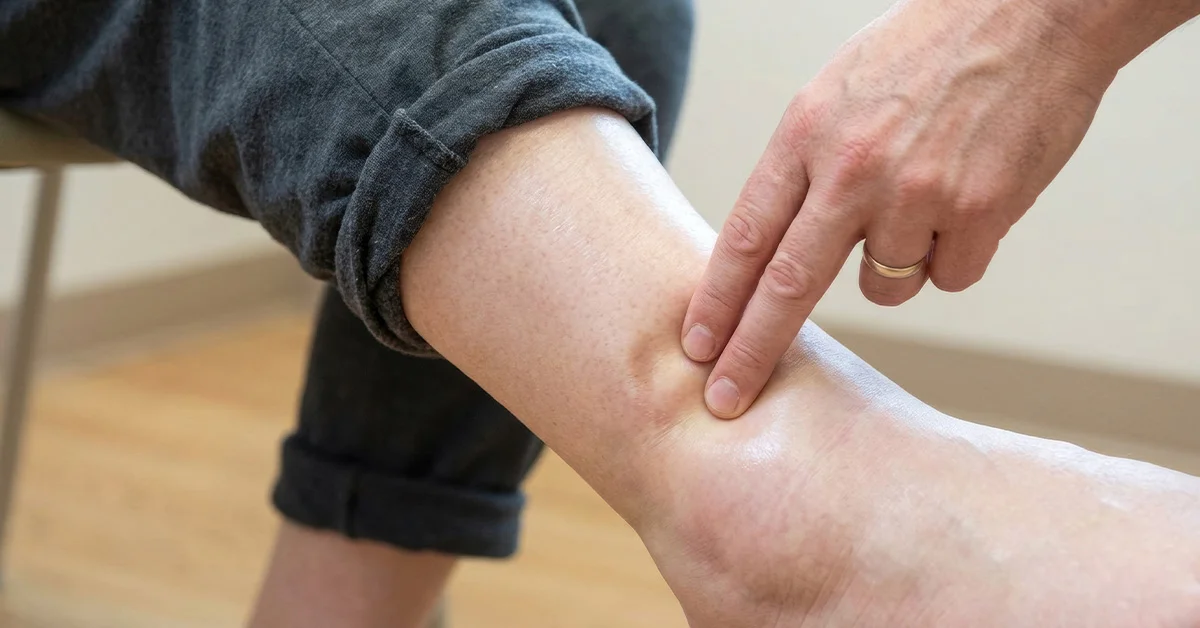
Have you ever noticed that your shoes feel a little tighter or your ankles look puffier at the end of a hot summer day? For some people, swelling in the feet and ankles becomes more noticeable when temperatures climb.
Mild swelling after spending time in the heat can be temporary and harmless. But swelling can have many causes, and sometimes it is a sign that something else is going on. Knowing what to look for can help you recognize when simple measures may be enough and when your symptoms should be evaluated.
Why Can Heat Make Your Feet and Ankles Swell?
When your body gets hot, blood vessels near the skin widen to help release heat. This can make it easier for fluid to move from the blood vessels into surrounding tissues.
Gravity also plays a role. Fluid tends to collect in the lower parts of the body, particularly the feet and ankles. That is why swelling may be more noticeable after a long day spent sitting, standing, traveling, or being outdoors.
For some people, this mild swelling improves after getting out of the heat, moving around, or elevating the legs.
Heat Isn’t Always the Only Explanation
Summer weather may make swelling more noticeable, but it is not the only possible cause. Swelling of the feet, ankles, or legs, sometimes referred to as edema, can be associated with a variety of factors.
These can include:
- Sitting or standing in one position for long periods
- Eating a diet high in sodium
- Certain medications
- Pregnancy
- Problems with the veins or circulation in the legs
- Heart conditions
- Kidney disease
- Liver disease
- Other underlying medical conditions
Certain medications, including some used to treat high blood pressure, can also contribute to ankle or leg swelling. If you think a medication may be involved, talk with your doctor before making any changes to how you take it.
What Can You Do About Mild Summer Swelling?
If your swelling is mild and appears to be related to heat or spending a long time on your feet, a few simple habits may help.
Try taking regular movement breaks if you have been sitting or standing for extended periods. Elevating your legs when resting can also help fluid move away from the feet and ankles.
Staying appropriately hydrated during hot weather is important as well. However, people with certain heart or kidney conditions may have individualized recommendations for fluid intake. If you are already under the care of an SMC physician, continue following the guidance provided as part of your treatment plan.
It can also be helpful to pay attention to sodium intake, particularly if swelling is something you experience regularly.
When Swelling Deserves Medical Attention
The pattern of swelling can provide important clues.
Swelling that appears suddenly, affects only one leg, becomes painful, or is accompanied by redness or warmth should not be dismissed as a result of hot weather. These symptoms can sometimes be associated with a blood clot or another condition that requires prompt evaluation.
Seek immediate medical attention if swelling occurs along with symptoms such as:
- Shortness of breath or difficulty breathing
- Chest pain or pressure
- Fainting, dizziness, or significant weakness
- Sudden swelling in one leg, particularly with pain, redness, or warmth
Swelling that keeps returning, continues despite rest and elevation, becomes progressively worse, or occurs along with other changes in your health should also be evaluated.
Persistent Swelling Is Worth Understanding
A little puffiness around the ankles after a long, hot day may not be unusual. What matters is whether it goes away, how often it occurs, and whether other symptoms appear along with it.
Persistent or unexplained swelling can sometimes be connected to cardiovascular health, circulation, kidney function, medications, or another underlying condition. Finding the cause is more important than simply trying to reduce the swelling.
At SMC Physicians, our Cardiology and Nephrology & Hypertension specialists can evaluate symptoms such as persistent swelling in the feet, ankles, or legs and help determine whether an underlying medical condition may be contributing. If swelling has become frequent, unexplained, or concerning, contact our team to request an appointment today.
Follow us on social:


